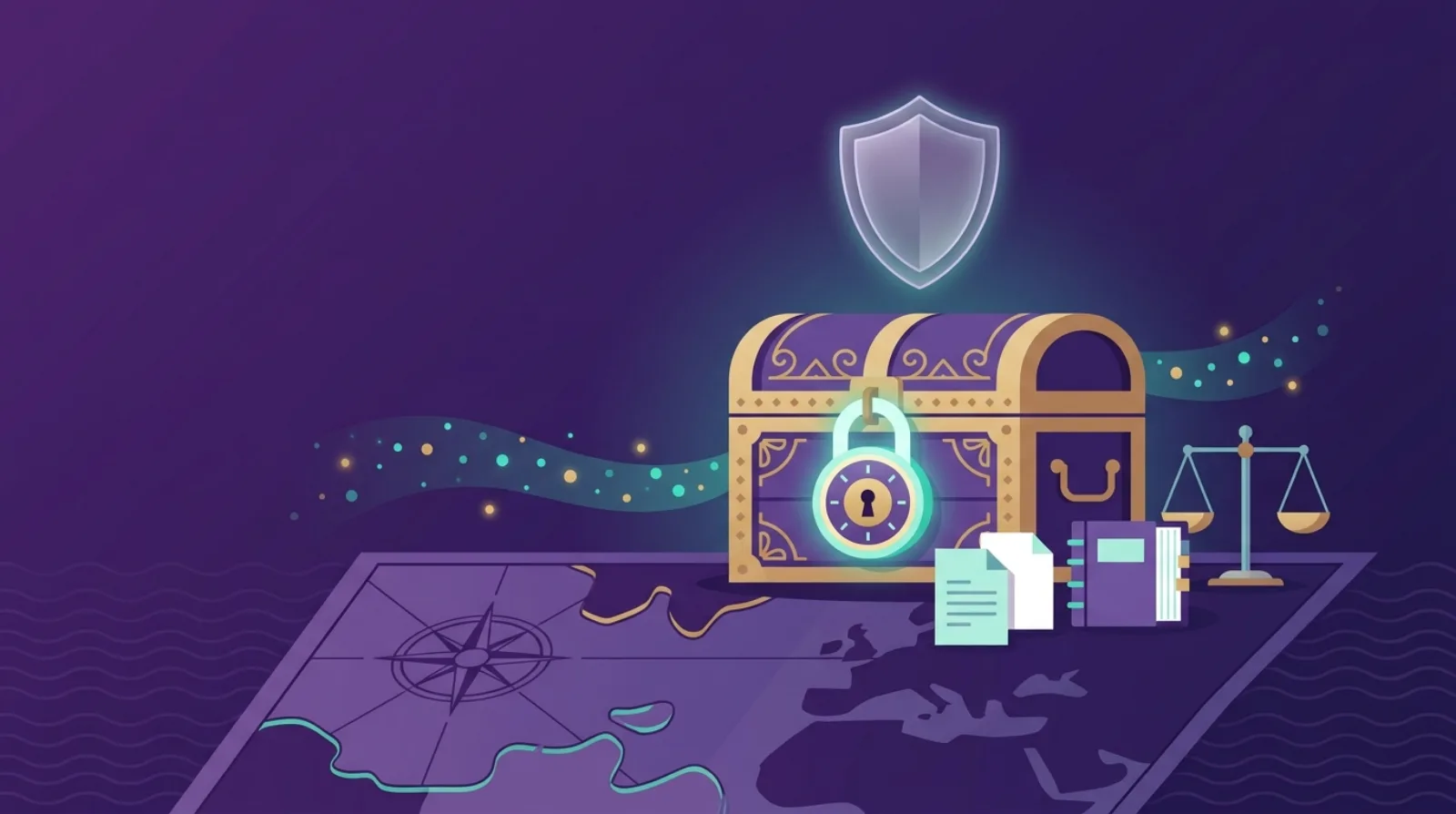
Why data privacy is the due-diligence blind spot most buyers skip
Every buyer checklist covers financials, traffic, and code quality. Almost none cover what happens to the customer data sitting in the database you're about to own. That's a gap, because the moment you sign, you inherit every email address, every payment record, and every cookie-consent log the seller ever collected — along with the compliance obligations attached to them.
Flippy's take: think of a customer database like cargo you're taking on board sight unseen. Nobody skips checking the ship's hull before setting sail, but plenty of buyers never open the cargo hold to see what's actually in the crates — and by the time they find out, they're already at sea.
This isn't really about becoming a privacy lawyer overnight. It's about knowing which five questions to ask before you wire funds, so you don't inherit a compliance mess disguised as a customer list.
What data the target actually holds (a 30-minute data map)
Before anything else, get a plain-language answer to one question: what personal data does this business actually collect, and where does it live?
- Customer and lead records — names, emails, phone numbers, shipping addresses, stored in the CMS, CRM, or e-commerce platform.
- Payment data — usually tokenized by the payment processor rather than stored directly, but confirm this rather than assume it.
- Marketing lists — the email platform (Klaviyo, Mailchimp, ConvertKit) and its segments, tags, and consent records.
- Behavioral and ad-tech data — analytics tools, retargeting pixels, and any third-party scripts collecting visitor data.
- Special-category data, if any — health, financial, or other sensitive information that carries a higher compliance bar.
Ask the seller for a simple export or screenshot of where each category lives and roughly how many records are involved. If they can't answer in a day, that's itself a signal: undocumented data is usually under-governed data.
Can you actually email the customer list on day one?
This is the question buyers care about most and check least. Owning a list of 20,000 subscribers is worth very little if you can't legally send them anything.
Purchased or transferred lists don't automatically carry valid consent for *your* business to email them. The relevant question isn't "did people subscribe," it's "did they consent to receive marketing from whoever now owns this brand, under a clear privacy notice." A few practical checks:
- Look for double opt-in records — a documented, timestamped consent trail is worth far more than a big subscriber count with no paper trail.
- Check whether the privacy policy at the time of signup disclosed that the list could be transferred in an acquisition or sale of the business — most well-drafted policies already do.
- Separate transactional contacts (customers who bought something, generally lower-risk to keep emailing about their order) from cold marketing contacts (higher-risk if consent is thin).
- Plan for a re-permission campaign for any segment where consent looks weak, rather than mailing blind on day one.
Vendor contracts and data processing agreements
Every tool that touches customer data — email platform, help desk, analytics, payment processor, hosting — is technically a data processor acting on the business's behalf. Each of those relationships should be backed by a data processing agreement (DPA).
When you review the target, ask for the list of active vendors with access to customer data and check whether DPAs exist and transfer to a new owner, or whether you'll need to re-sign them under your own entity. This is usually a paperwork exercise, not a blocker, but it's the kind of thing that's easy to forget in the excitement of a closing — and expensive to fix six months later when a vendor flags it during a security review.
Cookies, ad-tech, and consent banners
If the site runs analytics, retargeting pixels, or a chat widget, it's collecting visitor data before anyone becomes a customer. A quick, non-technical audit before you buy:
- Does the site show a cookie consent banner, and does it actually block non-essential trackers until consent is given — or does it just display a notice while tracking everyone regardless?
- How many third-party scripts are loaded (ad platforms, heatmaps, chat tools), and does each one still serve an active purpose?
- Is there a functioning opt-out mechanism for visitors in stricter jurisdictions?
None of this needs to be perfect before you buy. It needs to be *known*, so you can price the cleanup into your first 90 days rather than discover it when a platform flags the site.
Your audience is global, your tools might not be
Most small online businesses run on US-based SaaS tools — email platforms, help desks, analytics — while serving customers in the EU, UK, or elsewhere. That mismatch is normal and usually fine, but it's worth a light check rather than an assumption:
- Confirm the vendor stack (Klaviyo, Shopify, Stripe, Google Analytics, etc.) publishes standard data-transfer safeguards for EU customer data — most established platforms already do, and this is usually a five-minute check of their trust or legal page.
- If the target sells heavily into a specific regulated market, ask whether any past complaints or requests (data deletion, access requests) were logged and handled — and how.
You're not auditing an enterprise; you're confirming the tools are mainstream and the basics were handled, which they usually are for legitimate small online businesses.
Where this belongs in the deal
Data privacy findings don't need to kill a deal — they need to be priced and documented like any other due diligence item.
- Representations and warranties: ask the seller to represent that the business has complied with applicable privacy laws and hasn't had an undisclosed data breach.
- Disclosure schedule: any known gap (thin consent records, missing DPAs, no cookie banner) should be listed explicitly rather than glossed over.
- Remediation budget: build the cost of fixing real gaps — a proper consent-management tool, a re-permission email campaign — into your post-close budget, not your purchase price negotiation alone.
- Escrow or holdback: for anything material, a modest holdback tied to remediation is a cleaner outcome than trying to renegotiate price after you've already found the problem.
Platform-specific traps
- Shopify stores — check installed apps with customer-data access; abandoned or unused apps quietly retain access long after anyone stopped using them.
- SaaS products — user data often lives across the app database, a support tool, and a billing provider; map all three, not just the primary database.
- Content sites and newsletters — the subscriber list is often the single most valuable asset in the deal, which makes its consent quality the single most important thing to verify before you close.
- Any business with an EU or UK customer base — assume GDPR-adjacent obligations apply even if the seller is based elsewhere; the rules follow the data subject's location, not the seller's.
The first 30 days after closing
- Update the privacy policy and any consent notices to reflect the new ownership and controller.
- Confirm existing unsubscribe and data-deletion requests carried over and are still honored in your systems.
- Re-sign or update DPAs with vendors under your entity.
- Run the re-permission campaign for any weak-consent segments before sending anything beyond transactional email.
Common mistakes buyers make
- Treating list size as the whole story — a 50,000-subscriber list with poor consent records is worth less than a 5,000-subscriber list with clean opt-in trails.
- Assuming the seller's tools = compliance — using Klaviyo or Shopify doesn't automatically make a business compliant; the tools are compliant-*capable*, not compliant by default.
- Skipping the paperwork because the product looks clean — a well-built app or a polished storefront tells you nothing about whether consent was documented behind the scenes.
- Discovering the gap after closing — the cheapest time to price a privacy issue is before you sign, not after a customer complaint or a platform review flags it.
FAQ
Do I need a privacy lawyer to buy a small online business?
Usually not for a straightforward acquisition of a Shopify store, content site, or small SaaS product. The checks above are things a careful buyer can run in an afternoon. Bring in a lawyer if the business handles sensitive data (health, financial), has a large EU customer base, or if your own data mapping turns up something that looks like an undisclosed breach.
Can I keep emailing the customer list right after I buy the business?
Generally yes for transactional messages tied to an existing purchase. For broader marketing, check the consent trail first — if it's thin or undocumented, plan a re-permission campaign before you send a full marketing blast to the list.
What's the single highest-risk item on this checklist?
Weak or undocumented consent on the email list, because it's usually the asset buyers value most and check least. A close second is unaccounted-for third-party vendors with lingering access to customer data.
Does this apply if I'm buying a US-only business?
The core habits — data mapping, checking consent quality, reviewing vendor access — are worth doing regardless of where the customers are. The specific GDPR obligations apply once the business has EU or UK customers, but CCPA and other state-level US laws create similar (if less strict) expectations domestically.
Data privacy diligence is one of the few checks that costs almost nothing to run and can save you a real remediation bill down the line. Build it into your process the same way you already check financials and traffic — browse deals on Flipagora with this checklist in hand, compare data practices across Empire Flippers deals and Flippa listings, and set up deal alerts so you're first in line when a well-documented business hits the market.